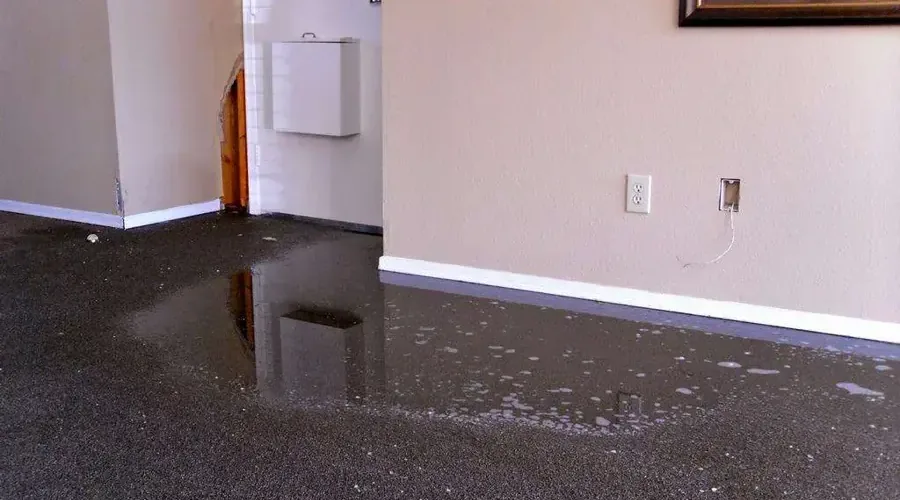
On June 13, 2019, Fox 13 reported that a water main break near Heughs Circle caused flooding in Canyon Ranch Condos in Holladay and left several nearby residents without water. On April 27, 2025, four water pipe breaks in one day left another neighborhood without water, and one neighbor's driveway flooded completely.
Key takeaways
- A main break floods from the outside in, so the cleanup question is how much water reached the building and how fast it can be removed.
- The Salt Lake City Department of Public Utilities handles water main breaks in parts of the city, including the Canyon Cove area.
- The utility repairs the main, while a restoration team handles the water that reached a home or building.
- In April 2025 the pipe in one neighborhood was ductile iron installed in the 1980s, on the replacement list with no schedule yet.
- Residents who go without water for a day or more should plan for the shutoff and for the day service returns.
Two main break stories
Both events show the same pattern: the water starts in the street and ends up in places no homeowner expected.
The residents in the reports lost water for a day or more, and in 2019 the flooding reached homes as well. A main break is rarely only a plumbing event.
- June 13, 2019: a break near Heughs Circle caused flooding in Canyon Ranch Condos and left several nearby residents without water.
- April 27, 2025: four water pipe breaks in one day, with another break the previous Wednesday, left a neighborhood without water.
- One neighbor's driveway flooded completely when the pipe broke in April 2025.
- One resident called it her second all day outage in under a week and recalled about 36 hours without water the previous Easter.
Whose water is it
Salt Lake City Public Utilities reported the June 2019 break, and the Salt Lake City Department of Public Utilities handles water main breaks in parts of Holladay, including the Canyon Cove area.
The utility repairs the main and restores service. It does not dry the inside of a building, so the water that reached a home or complex is a separate job.
That split of duties is why two crews can be on the same street: one in the road and one inside a building. The restoration team does not touch the main, and the utility does not dry a basement.
When the water reaches a building
A main moves far more water than a household pipe, and it can keep moving for as long as it takes to shut it down.
Garages and lower levels take the water first because they sit below the driveway or the street. Water that reaches carpet, pad and the bottom of the drywall soaks all three, so early removal matters.
Houses and driveways
Water from a main break can run down a driveway toward a garage door, fill a window well or push through a basement window. The first sign is often water at the lowest door.
A water extraction crew removes standing water first, then checks walls and floors for what the water soaked.
Buildings with several homes
In a complex like Canyon Ranch Condos, one flood can touch many homes at once, along with shared walls, garages and common rooms. Managers, owners and residents all have a part in the response.
A commercial water damage response for a building like this works in zones so the dry homes stay in use.
Old pipe and repeat breaks
The Salt Lake City Department of Public Utilities said the ductile iron pipe in the April 2025 neighborhood was installed in the 1980s, has a high priority for replacement and is on the list with no schedule yet.
A homeowner cannot replace a city main. What a homeowner can do is prepare for another outage and know what to check when service returns.
- Know where the main shutoff valve is and how to close it.
- Write down the dates and length of each outage.
- Photograph any damage right away, before cleanup begins.
- Compare notes with neighbors, since a repeat break often affects the same street.
Steps while the street is still flooding
The first moves are the same whether the water is a few inches or a few feet.
Moving water has force. A few inches running across a driveway can knock a person off balance, and the ground under it can be washed out.
- Keep out of flooded basements and garages, where water can reach outlets and panels.
- Move vehicles, belongings and valuables away from the water if it is safe to do so.
- Photograph the water, its depth and anything it reached before cleanup starts.
- Report the break to the utility if it has not been reported.
- Do not open drains or run pumps into a neighbor's property.
Preparing for an outage and the return of service
Outages of a day or more are hard on a household. They also create their own water risks.
When water service returns, taps and appliances that were left open can start running at once. Checking each one before leaving the house avoids a second flood.
A household can plan for a long outage, such as the 36 hours one resident recalled from the previous Easter. Having drinking water on hand and knowing where the shutoff is makes a long outage easier.
- Close faucets and check the washer and dishwasher before service returns.
- Keep a supply of drinking water on hand.
- Know where the main shutoff valve is and how to close it.
- After service returns, run each tap briefly and look for leaks.
Extraction and drying afterward
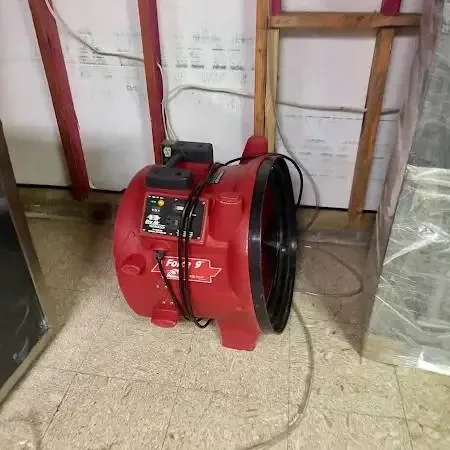
Once the water stops, the work follows the usual order: remove the standing water, find what it soaked and dry the structure to readings.
If a burst pipe cleanup is needed inside the building, the team treats that separately from the water that came in from outside. Keep notices from the utility, photos and readings together for the insurer.
A complex with several homes should check units that did not look wet, since water can travel under shared floors and behind shared walls.
Questions
Who handles a water main break in Holladay?
The Salt Lake City Department of Public Utilities handles water main breaks in parts of the city, including the Canyon Cove area.
Does the utility dry my building?
No. The utility repairs the main and restores service. Removing and drying the water inside a home or building is a separate job.
How often do mains break?
The April 2025 report described four breaks in one day and another break the previous Wednesday in one neighborhood, on ductile iron pipe installed in the 1980s.
Is a main break flood treated as clean water?
Not necessarily. Water that crosses a street and a yard can pick up soil and contaminants, so the restoration team judges it by the readings and the path it took.
What should be kept for the insurance claim?
Photos with time stamps, any notice from the utility, the restoration team's moisture readings and a list of damaged items.
Can a main break damage a home that looks dry?
Yes. Water can travel under floors and inside walls, so moisture readings are the way to know. A home that sat near a flooded driveway or garage is worth checking.