Water Heater Failure Cleanup in Midvale, UT
When a tank splits or a fitting lets go in a Midvale basement utility room, the extraction crew pulls the water before it runs under the finished walls, and the drying team dries the slab and framing.
(888) 558-4812 Water heater leaking across the floor? Call- Utility room to finished space
- Thermal imaging
- LGR dehumidifiers
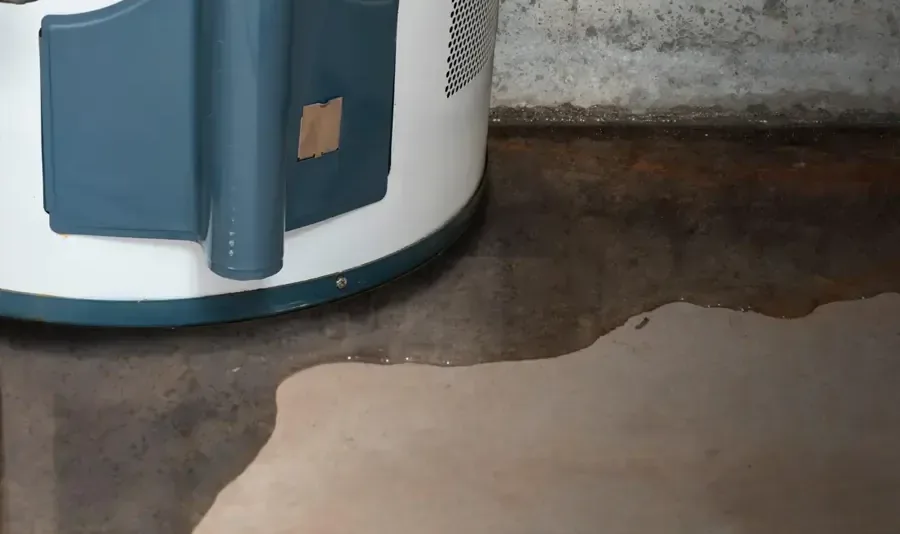
What to do first about water heater failure cleanup
- 1
Close the cold valve
Shut the cold-water supply on top of the tank, or the main if you cannot reach it.
- 2
Turn off the heat source
Switch off the breaker for an electric tank or set a gas tank to off.
- 3
Lift what is on the floor
Move boxes and stored items off the wet slab and out of the next room.
- 4
Photograph the tank
Shoot the tank label, the leak point and the wet floor for the claim.
What does water heater failure cleanup cost in Midvale, UT?
Water heater failure cleanup in Midvale, UT typically runs $1,200 to $5,500, depending on how far the water spread past the utility room, whether finished rooms got wet and how fast extraction started.
Utility room only
$900 to $2,200
- Extraction
- Slab drying
- Daily readings
Into a finished room
$2,200 to $5,500
- Baseboards off
- Wall cavity drying
- LGR dehumidifiers
Several rooms or carpet
$5,500 to $11,000+
- Pad removal
- Flood cuts
- Extended drying
Ranges are typical, never a quote: the water category, the square footage, the material class and how fast drying started move the number most. For a planning figure, try the water damage cost calculator.
In most Midvale homes the water heater sits in the basement next to the furnace, often right beside a finished family room or bedroom. When the tank splits, the full tank and then the incoming supply keep flowing until the cold-water valve is closed, so the water spreads across the slab and under walls fast.
Where tank water hides
- Under the bottom plate of finished walls next to the utility room.
- Beneath carpet pad and laminate in the next room.
- In the base of storage shelves and boxes on the floor.
- Along cold joints in the slab, where it spreads further than it looks.
Clean water, if drying starts early
Tank water starts as Category 1, so carpet and drywall can often be dried in place when extraction begins within a day or two. Left longer, it degrades to Category 2 and more has to come out. The drying team maps moisture with a thermal camera, extracts, removes baseboards to reach the bottom plate and runs LGR dehumidifiers. Wet framing is finished with structural drying.
Why tanks fail
Sediment, corrosion and age are the usual causes, and hard water speeds up sediment buildup. A drain pan, a leak alarm and a yearly flush help. The Department of Energy Energy Saver page covers water heater care, and EPA WaterSense covers leak checks around the home.
How water heater failure cleanup is handled
Each step follows the IICRC S500 drying standard and leaves a record for the claim file. Equipment stays until the readings say dry.
- 1
Map
Thermal imaging finds water under walls and flooring.
- 2
Extract
Truck-mounted extraction from slab, carpet and pad.
- 3
Open up
Baseboards off and drilled holes or cuts where walls are wet.
- 4
Dry and verify
Air movers and LGR until readings match a dry reference.
Water heater failure cleanup across Midvale and Salt Lake County
Midvale Water Damage Restoration covers ZIP 84047, from historic Main Street and the Jordan River side east across the I-15 corridor to Fort Union, with Bingham Junction, State Street and the homes along Little Cottonwood Creek in between.
Nearby coverage reaches Murray, Taylorsville, Cottonwood Heights, Holladay, West Jordan, Sandy, South Jordan, Millcreek.
Water Heater Failure Cleanup questions in Midvale
Still dealing with it?
Tank water spreading toward finished rooms? The crew extracts it and dries the walls it reached.
(888) 558-4812 Ask about the tank leak cleanupHow much water does a failed water heater release?
A typical residential tank holds 40 to 50 gallons, and a split tank keeps refilling from the supply until the cold-water valve is closed. That is why the water often reaches the next room.
Is water heater failure cleanup covered by insurance?
A sudden tank failure is often treated as sudden and accidental, while slow leaks over weeks may not be. The tank itself is usually not covered. Check your own policy.
Can the carpet next to the utility room be dried?
Often yes, when extraction starts within a day or two, because tank water starts clean. The pad may still come out if it stayed soaked.
How long does drying take after a water heater failure?
Most utility-room and next-room losses dry in three to five days. Water under the bottom plate of finished walls can add time, and equipment stays until readings say dry.
Should the restoration crew replace the water heater?
No. A plumber replaces the tank. Water heater failure cleanup covers the water, the wet materials and the drying, with the readings documented for the claim.
Water heater burst in a Midvale basement? Get the water up.
Tank water moves under walls and flooring within hours. Extraction first, then drying until the readings say done.