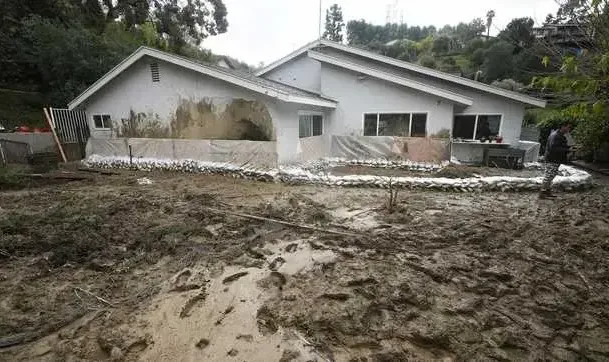
On April 10, 2023, spring runoff from Utah's record snowpack pooled across Wasatch Boulevard in Cottonwood Heights after a warm Easter weekend, and storm drains backed up. Public Works crews were clearing drainage systems before 5 a.m., and the road stayed open with police supervising. The reports describe a roadway, not flooded homes, but the same water behavior is what threatens window wells and basements.
Key takeaways
- Fast snowmelt on a warm weekend can overload storm drains, and water that cannot drain collects against foundations and in window wells.
- The April 10, 2023 reports describe ponding on Wasatch Boulevard and backed up drains, not flooded houses, so treat the day as a warning sign.
- The National Weather Service says deep pools on a roadway can undermine it, a reminder that standing water does damage below the surface.
- April is the wettest month at about 3.49 inches, followed by May at about 3.13 inches, so clear wells, drains and downspouts before the thaw.
- If water does reach a lower level, keep clear of wet outlets, get the standing water out first and let the drying team set the plan for drywall and pad.
What happened on Wasatch Boulevard
After a warm Easter weekend, spring runoff from Utah's record snowpack pooled across Wasatch Boulevard on Monday, April 10, 2023.
Storm drains backed up, Public Works crews cleared drainage systems before 5 a.m., and the road stayed open.
That month the National Weather Service said major flooding was not expected along the Wasatch Front, but minor flooding was likely near rivers and foothills, and Salt Lake County offered sandbags.
- Runoff pooled across the roadway after a warm holiday weekend.
- Storm drains backed up under the volume of meltwater.
- Crews were clearing drainage before 5 a.m. and the road stayed open.
- No report from that morning describes water entering a home.
Why a backed up drain matters to a house
A storm drain is how runoff leaves a street. When it backs up, water looks for the next low spot, and that spot is often a driveway apron, a yard graded toward the house or a window well.
Snowmelt is steady, not sudden. A warm weekend can keep water moving for days, so a drain that is slow on Saturday can be overwhelmed by Monday.
Ice makes the problem worse. A frozen drain grate or a frozen window well drain keeps meltwater at the surface, where it spreads toward the lowest opening.
Where the water goes first
The first places to take on water are the openings that sit below the surrounding ground.
- Window wells with leaves, grit or ice packed in the bottom.
- Basement stairwells and walkout doors at the low side of the lot.
- Corners where a patio or walkway meets the foundation.
- Garage floors where the driveway slopes toward the door.
What the lower level shows
Early signs are a damp edge on carpet along an exterior wall, a dark stain low on drywall or a sheen of water around a floor drain.
A musty smell that appears after a thaw is a sign that water is already inside the wall or under the flooring.
How the canyons feed the creeks nearby
A high ridge separates the valleys of Big Cottonwood Creek and Little Cottonwood Creek, and at the eastern edge of the city those valleys narrow into Big Cottonwood Canyon and Little Cottonwood Canyon.
Brighton, at the top of Big Cottonwood Canyon, receives over 50 inches of precipitation a year, mostly snow, with about 400 inches of snowfall measured there.
That snow melts into Big Cottonwood Creek, which flows through Cottonwood Heights, Holladay and Murray before it empties into the Jordan River. Flooding is relatively rare on the creek itself, which is why street drainage and foundation grading matter more for most homes.
A homeowner's checklist before the thaw
The cheapest repair is the one that keeps water from reaching the house at all. Most of this checklist takes less than an afternoon.
A window well flooding cleanup is a common result when a well fills faster than it drains, so wells deserve the first look.
- Clear leaves, grit and ice from window wells and make sure each well drain is open.
- Extend downspouts so roof water leaves the foundation instead of soaking beside it.
- Check that soil and walkways slope away from the house.
- Test the sump pump and its discharge pipe if the home has one.
- Keep storm drain grates near the property clear of snow and debris where it is safe to do so.
- Move boxes and stored items off basement floors and onto shelves.
If water reaches the lower level
Water that has crossed streets, yards and driveways is not clean water, and the restoration team handles it as contaminated until the readings and the source say otherwise.
The first moves
- Keep out of standing water near outlets, cords and appliances until the power to that area is off.
- Move valuables, boxes and furniture off wet floors.
- Photograph the water and the damaged items before cleanup begins.
- Stop any source you can safely stop, such as a clogged window well drain.
What the restoration team does
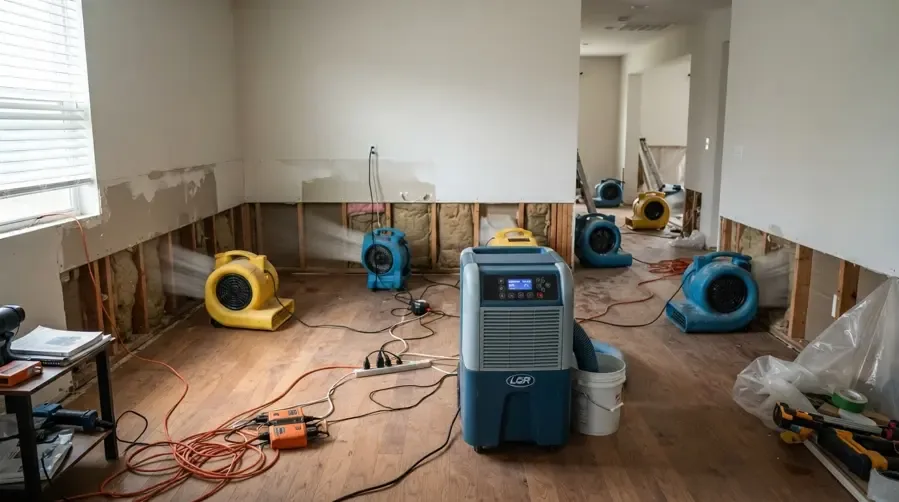
The extraction crew removes the standing water first, because water left in place keeps soaking carpet pad, drywall and framing.
The team then maps moisture in the walls and slab, removes materials that cannot be dried and sets drying equipment to work toward dry readings. A full basement flooding cleanup and a cloudburst and storm flood cleanup follow the same order of work.
Wet months, dry months and when to act
NOAA 1991 to 2020 normals for a Cottonwood Heights station show about 25.92 inches of precipitation a year. April is the wettest month at about 3.49 inches, followed by May at about 3.13 inches and March at about 2.77 inches.
July is the driest month at about 0.92 inches, with August at about 1.11 inches. The calendar says the work of clearing wells, drains and downspouts belongs before March, not after the first wet week.
- Late winter: clear wells, test the sump pump and walk the grading.
- March through May: watch the forecast for warm spells that speed up melting.
- After any pooling in the yard: check the lower level right away.
Questions
Did homes flood on April 10, 2023?
The reports describe runoff pooling across Wasatch Boulevard and backed up storm drains. They do not describe flooded homes, so the day is best read as a warning about how quickly snowmelt can overwhelm drainage.
Why does the National Weather Service warn about pools on a road?
Deep pools can undermine a road and leave only a thin layer of asphalt over washed out earth. The same idea applies at a foundation, where standing water does more than wet the surface.
How is a window well different from a basement leak?
A window well is an open pit that collects rain and meltwater against the wall. When it fills faster than it drains, water can push past the window or its seal and spill into the room.
What comes first if a lower level takes in water?
Stay clear of standing water near power, move belongings, photograph the damage and get the standing water removed. Wet drywall and pad are best judged by a restoration team before anything is replaced.
How soon does drying matter?
Materials that stay wet past 24 to 48 hours can begin to grow mold, so extraction and drying should start as soon as the source of water is under control.