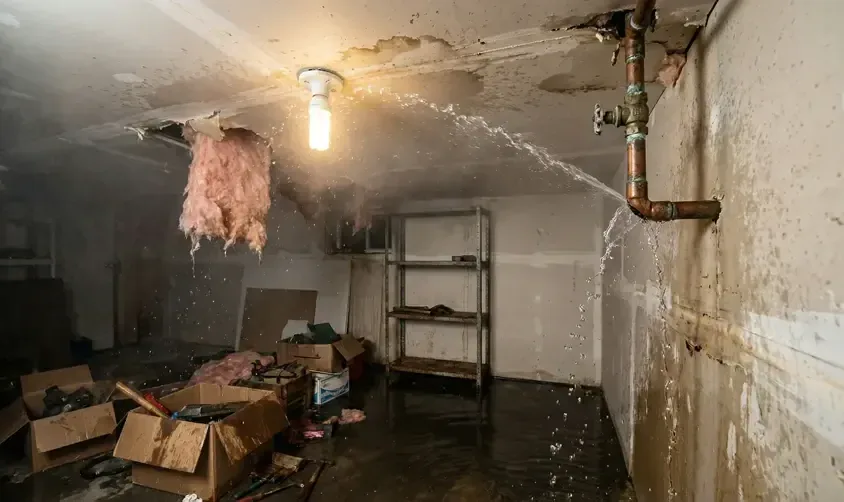
Most West Jordan customers share the water service pipe with the city. The homeowner is typically responsible from the meter to the house, and the city from the meter to the main. That split decides where to shut water off and who repairs what when a pipe bursts.
Key takeaways
- Typically the homeowner is responsible for the water service pipe from the meter to the house, and the city from the meter to the main.
- A burst inside the house is on the homeowner side, so the first job is the shutoff and the second is getting the water out.
- The city asks owners of homes built before 1988 to identify whether the service pipe is lead, copper, galvanized or plastic, and an exposed pipe is a good time to find out.
- The city offers a Leak Adjustment Request Form that a customer can file after a water leak has been fixed, so keep the repair and drying records.
- Dry the framing before closing a wall, because the wet part of a burst is usually the part nobody can see.
Who is responsible for which stretch of pipe
The city buys treated water from the Jordan Valley Water Conservancy District, and its Utilities Department maintains the pipelines that deliver nearly 20 million average gallons of water a day.
Between the main in the street and the house sits the service pipe, and most customers share it with the city. The meter marks the split.
The city also tests its supply: the water department takes more than 100 water samples each month. That work stops at the meter, so what happens on the house side is the homeowner's to manage.
- From the meter to the house: typically the homeowner.
- From the meter to the main: typically the city.
- Inside the house, from the first shutoff valve onward: the homeowner.
- If it is unclear which side a leak is on, the city's Utilities Department can say.
Finding the shutoff and stopping the water
A burst pipe moves a lot of water in a short time, so the shutoff is the first move and nothing else matters until it is done.
Every household should know where its main shutoff valve sits before a burst happens. It is often in a basement, a utility room or a garage wall, near where the pipe enters the house.
Teach every adult in the household where the valve is. A valve that has not been turned in years can stick, so it is worth exercising it gently once a year before it is needed.
- Close the main shutoff valve inside the house.
- If the valve will not turn, use the shutoff at the meter, on the homeowner side.
- Open a low faucet to drain what remains in the pipes.
- Turn off the water heater so it does not run dry.
- Keep out of any room where water is near outlets or cords.
What a burst does inside the house
Where the pipe splits decides how far the water travels. The restoration team follows the water, not the visible stain.
A pipe inside a wall
Water runs down the inside of the wall, soaks insulation and drywall and then spreads under the baseboard into the floor. The room can look dry while the wall cavity stays wet.
Moisture readings and a thermal camera show how far the water went, and the drywall is opened where it did not stay dry.
A pipe above a ceiling or under a floor
Water pools on the ceiling and then falls through it, or it soaks the subfloor and drips to the level below. Two floors can be affected by one split pipe.
Ceiling drywall that holds water can sag and fail, so a bulging ceiling is a reason to keep out of the room.
Extraction and drying, in order
A burst pipe cleanup follows a set order so the structure ends up dry and not just looking dry.
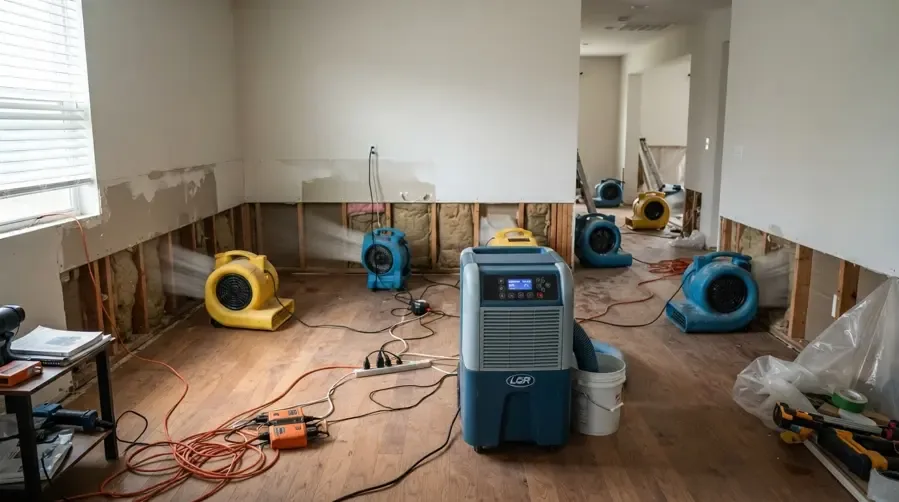
Drying time depends on how many layers the water reached. Drywall, insulation and flooring dry at different rates, so the team checks each layer separately and keeps equipment running until all of them read dry.
- Stop the water and confirm the pipe is shut off.
- Remove standing water with pumps or an extractor, using water extraction as soon as it is safe.
- Remove materials that cannot be dried, such as soaked pad and insulation.
- Open wall and ceiling cavities where readings are high.
- Place dehumidifiers and air movers and log the readings every day.
- Close up only when the readings match a dry reference.
The pre 1988 question
Before 1988 lead was commonly used to make water pipes. West Jordan says its water mains and wells have no lead, but lead can enter drinking water through private pipes or lead service pipes.
The city asks owners of homes built before 1988 to identify whether the water service pipe is lead, copper, galvanized or plastic. A burst that exposes the pipe is a natural moment to look at what it is made of and to write it down.
The bill after the repair
A burst can run a long time before anyone notices, especially if it is in a wall or a vacant room. The water bill shows it afterward.
West Jordan offers a Leak Adjustment Request Form for an account check after a water leak has been fixed. The Finance Department collects payments for garbage, water, sewer, stormwater and streetlight utilities, so the repair invoice and the drying records are worth keeping together.
Keep the bill request separate from the insurance claim, since they ask different questions. One asks the city about the account, and the other asks the insurer to pay for damage.
Documenting the loss
Good records speed up an insurance claim and a bill adjustment request. They also show what was dry and when.
Homeowners can also look at the other water problems the West Jordan water damage services cover, or at the main burst pipe cleanup page for the full process.
- Photographs of the burst pipe, the wet areas and anything removed.
- The plumber's invoice and a note of which side of the meter the repair was on.
- The restoration team's moisture readings from the first day to the last.
- A list of damaged belongings, with photos where possible.
Questions
Who is responsible for a burst in the water service pipe?
West Jordan says most customers share the service pipe with the city. Typically the homeowner is responsible from the meter to the house and the city from the meter to the main.
Where should the water be shut off first?
At the main shutoff valve inside the house. If it will not close, the shutoff at the meter on the homeowner side is the next option.
What is the Leak Adjustment Request Form?
It is a form the city offers for an account check after a water leak has been fixed. Keeping the repair invoice and drying records makes the request easier to support.
Why does the city ask about pre 1988 pipes?
Lead was commonly used for water pipes before 1988. The city says its mains and wells have no lead, but lead can enter water through private pipes or lead service pipes.
How long does a burst pipe cleanup take?
It depends on how many walls, floors and ceilings the water reached. The team works until the readings match a dry reference, not to a fixed number of days.
Should the burst be photographed before it is repaired?
Yes. Photograph the broken pipe, the wet areas and the damage before the plumber or the crew removes anything. Those photos support both an insurance claim and a bill adjustment request.