When sewage comes up through a floor drain or toilet, the first question is how to clean it up. A quick second question is who provides sewer at that address. Murray City provides power, water, sewer, garbage and stormwater utilities in many areas, and other providers serve areas without city owned infrastructure.
Key takeaways
- Sewer service depends on where the property sits, so confirm the provider before assuming who can look at the main.
- The utility billing office can say which provider serves an address, which matters when the blockage is in the main and not the fixture.
- A backup is treated as Category 3 water: contain it, keep people and pets away and remove porous materials it touched.
- Do not use water in the house while the backup is active, since every flush and drain adds to the problem.
- Cleanup, drying and plumbing repair are separate jobs, and the restoration team handles the water and surfaces, not the pipe.
Why the provider question comes first
The city says it provides power, water, sewer, garbage and stormwater utilities in many areas. It also says other providers serve areas without city owned infrastructure.
That means two neighbors on the same street may not use the same provider. If the clog sits in the shared main, the right office to talk to depends on the address.
Murray Utility Billing is the office that can say which provider applies. Who owns the pipe between the house and the main is not stated for the city, so it should be confirmed with the provider before anyone assumes.
Fixture clog or main clog
Not every backup comes from the street. A clog in a single drain affects only that fixture, while a blocked main shows up at the lowest openings in the house.
A plumber can confirm which it is with a camera or a drain snake. The restoration team does not need that answer to begin removing water, but the answer decides whether the problem can return the next day.
- One slow sink or tub points to a clog in that fixture's own drain.
- A toilet that gurgles when the washer drains points to a shared drain.
- Water or gurgling at a basement floor drain suggests the main may be blocked.
- Several fixtures backing up at once also points to the main.
What to do while the water is coming up
The goal while a backup is active is to keep it from getting worse and to keep people away from it.
- Stop running water: no flushing, laundry, dishwasher or long showers.
- Keep children, pets and anyone with a weak immune system out of the area.
- Stay out of the water near outlets, cords and appliances until power to that area is off.
- Wear waterproof boots and gloves if the area has to be entered.
- Do not use a household vacuum on sewage water.
How a Category 3 backup is cleaned
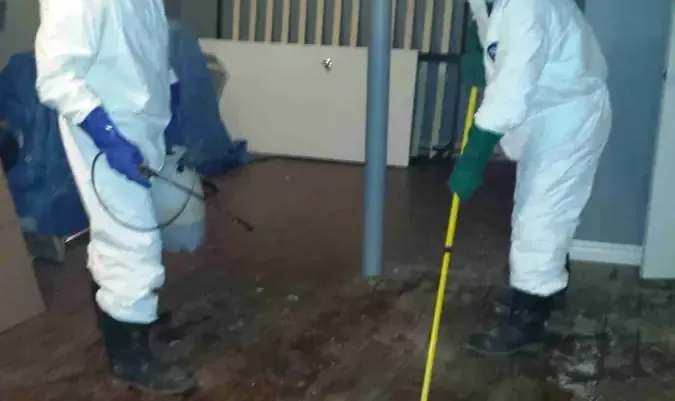
Sewage is treated as Category 3 water, which means it is considered grossly contaminated. The work is built around containment first and removal second.
The extraction crew removes standing water, then the team removes porous materials the sewage touched: carpet, pad, the lower section of drywall, baseboards and insulation. A sewer backup cleanup leaves hard surfaces cleaned and disinfected, then dried.
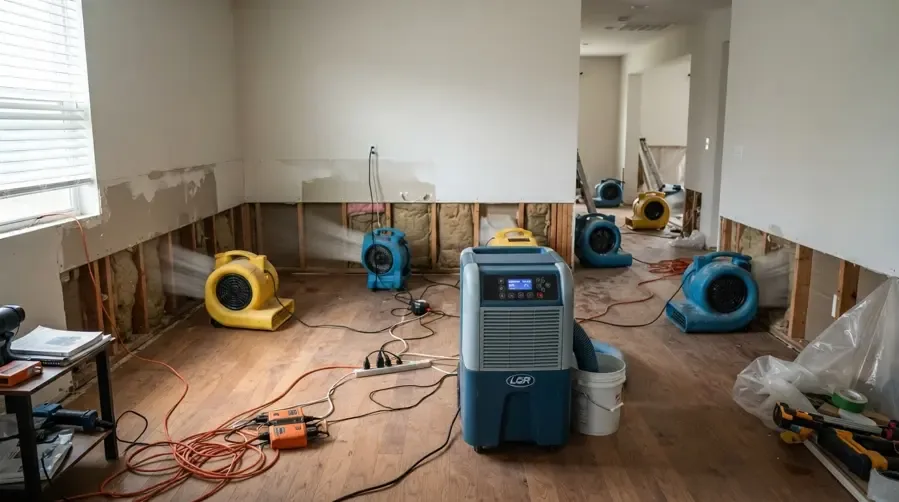
Moisture readings steer the rest of the job. The team checks the slab, the base of the walls and cabinet toe kicks, since contaminated water wicks upward and sideways, and anything that stays wet and cannot be cleaned is removed.
What gets removed
- Carpet and carpet pad in the affected area.
- Drywall and trim that wicked up contaminated water.
- Insulation and any stored cardboard or fabric on the floor.
What gets cleaned and dried
- Concrete slabs and tile, cleaned and disinfected.
- Framing and cabinet bases, cleaned and dried to readings.
- The air in the work area, controlled so contamination does not spread.
Who to talk to, in order
The right order keeps cleanup moving while the cause gets fixed. A water extraction crew can start on the standing water once the backup has stopped rising, while the cause is being found.
Keep the order flexible. If the water is still rising, the first step is stopping water use and keeping people out, and contacting the provider or a plumber can follow as soon as it is safe to make those arrangements.
- Utility billing, to find out which provider serves the address.
- That provider or a plumber, to clear and check the main or the house drain.
- A restoration team, to remove the water and contaminated materials.
- The homeowner's insurer, since many policies treat sewer backup as separate coverage that depends on the wording.
After the cleanup: records and prevention
The restoration team keeps moisture readings, photos and a list of removed materials. Those records support an insurance claim and show the area was dried before it was closed up.
A plumber can explain what caused the blockage and what, if anything, reduces the chance of a repeat. No local rule about backup devices or permits is stated here, so that conversation belongs with the plumber and the provider.
Allow the area to dry fully before rebuilding. Closing a wall over damp framing is the most common way a cleaned backup turns into a second problem.
- Ask what was found in the pipe: roots, grease, a collapsed section or something else.
- Ask whether the main is shared with neighbors and who was told about the problem.
- Keep every invoice, photo and reading together in one folder.
A mix of homes from the historic district to Fireclay
The city is nearly built out and has 21,557 housing units, from the Murray Downtown Residential Historic District to newer homes around the Fireclay transit area.
The cleanup steps are the same across that range. What changes is how far the water traveled and what the floors and walls are made of, which the moisture readings show.
Homeowners with a backup in a rental or shared building can read the Midvale sewer backup cleanup page for the same process, and the Murray hub for other water problems.
Questions
Does the city always handle a sewer backup?
Not always. The city provides sewer in many areas, but other providers serve areas without city owned infrastructure, so the provider depends on the address.
Who owns the pipe from the house to the main?
That is not stated here. The utility billing office or the provider that serves the address can say what applies.
Is sewage water dangerous?
Yes. It is treated as Category 3 water, which is grossly contaminated, so people and pets should stay out until it has been removed and the area has been cleaned and disinfected.
Can carpet be saved after a backup?
Usually not. Carpet and pad that sewage water touched are generally removed, since they hold contamination that cleaning does not reliably reach.
Is a sewer backup covered by insurance?
Many policies treat sewer backup as separate coverage, so it depends on the wording. Check the policy or ask the insurer before work begins.
Can the household stay in the house during cleanup?
It depends on how far the backup spread. A small floor drain event in an unfinished area may leave the rest of the house usable, while a backup that reached living space may need a short stay elsewhere. The crew sets containment and says which rooms are safe.