Sewer Backup Cleanup in Murray, UT
Sewage rising from a floor drain or toilet is a health issue first and a drying job second. The extraction crew contains the area, removes the contaminated water and materials, then sanitizes and dries what remains.
(888) 558-4812 Drain backed up? Get it contained- Containment first
- Contaminated material out
- Sanitizing and drying
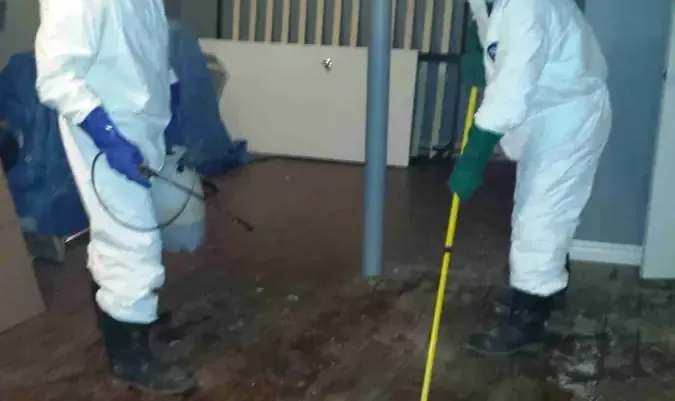
What to do first about sewer backup cleanup
- 1
Stay out and keep others out
Keep children and pets away from the wet area.
- 2
Stop using the plumbing
Hold off on flushing, showers and laundry so more wastewater does not come up.
- 3
Leave the cleanup alone
Mopping or wet-vacuuming sewage spreads bacteria and pushes it into porous materials.
- 4
Photograph and note it
Record the drain, the high-water mark on the walls and damaged belongings before anything moves.
What does sewer backup cleanup cost in Murray, UT?
Sewer backup cleanup usually runs from about $1,500 to well over $20,000, driven by how much of the floor was reached, what had to be removed and whether the structure needs a long dry-out.
A drain zone on bare floor
$1,500 to $4,000
- Extraction
- Sanitizing
- Short drying
One finished room
$4,000 to $9,000
- Carpet and pad out
- Low drywall cut
- Antimicrobial
The entire lower level
$9,000 to $20,000+
- Full containment
- Debris hauled
- Extended drying
Ranges are typical, never a quote: the water category, the square footage, the material class and how fast drying started move the number most. For a planning figure, try the water damage cost calculator.
A sewer backup comes from the main drain or a fixture drain pushing wastewater back into the home, usually through a basement floor drain, a shower or a toilet. The water carries bacteria and should be handled as contaminated from the first moment, whatever it looks like. Children, pets and anyone with a weak immune system should stay out until the area is cleared.
Who serves the sewer matters
Murray City provides sewer in many areas, and other providers serve the rest. Murray Utility Billing can say which provider serves a property, and a plumber finds where the blockage sits. Whichever provider is responsible, stopping the spread inside the house comes first.
What gets removed and what gets saved
Sewage soaks into anything porous, so carpet, pad, insulation and the bottom of the drywall are usually removed. Hard surfaces such as concrete, tile and framing are cleaned, sanitized and dried. Pooled water goes first, through water extraction.
- Wastewater is extracted and the affected zone is closed off from the rest of the house
- Crew members wear protective gear and carry waste out in sealed bags
- Surfaces get a cleaner, then an antimicrobial treatment
Drying after sanitizing
Once the contaminated materials are gone, air movers and a dehumidifier dry the framing and slab. Daily readings confirm the structure is dry before rebuilding starts, and structural drying details how that is measured.
How sewer backup cleanup is handled
Each step follows the IICRC S500 drying standard and leaves a record for the claim file. Equipment stays until the readings say dry.
- 1
Contain
The area is sealed off and wastewater is extracted.
- 2
Remove
Soiled porous materials are bagged and removed.
- 3
Sanitize
Surfaces are cleaned and treated with an antimicrobial.
- 4
Dry
Air movers and dehumidifiers run until the readings settle.
Sewer backup cleanup across Murray and nearby communities
Sewer backup work covers South Cottonwood, Cottonwood West, Bergertown and the Fireclay area, from the Jordan River side out to Van Winkle Expressway, plus homes and shops along State Street and Highland Drive in ZIP codes 84107 and 84123.
The same service nearby: sewer backup cleanup in Midvale, Taylorsville, Holladay.
Sewer Backup Cleanup questions in Murray
Still dealing with it?
Sewage on the floor? The extraction crew contains the area, removes the contaminated material and sanitizes what is left.
(888) 558-4812 Ask how containment worksIs sewage backup the same as ordinary water damage?
No. Sewage is Category 3, so it carries bacteria and calls for protective gear, containment and removal of porous materials that would simply be dried after a clean water leak.
Plumber or restoration crew first?
Both are usually needed. A plumber clears the blockage and finds the cause, while the restoration team removes the sewage and dries the structure.
Can carpet be saved after a sewer backup?
Almost never. Carpet and pad that sewage soaked are removed because bacteria stay in the fibers even after cleaning, though hard flooring and framing can usually be sanitized and kept.
Does insurance cover a sewer backup?
Many policies exclude it unless a water backup endorsement was added, so owners should read the policy or ask the carrier early. Photos and the drying log help any claim.
How long does the whole job take?
Removal and sanitizing usually take a day, and drying can add three to five days. Equipment stays until readings show the structure has reached the dry standard.
Sewage in the house? Keep it contained.
Contaminated water spreads the longer it sits, so the sooner the area is sealed and cleared, the fewer materials are lost.