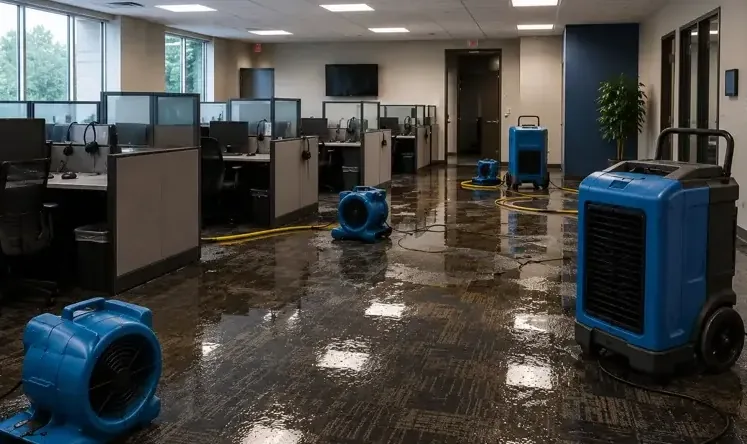
KSL reported on July 4, 2013 that overnight flooding from rain displaced 75 people in a Taylorsville residential area. About 1/2 inch of rain fell in some mid valley areas, and the rainwater flooded the bottom floor of an apartment building. It makes a good example for planning the first day before a storm, not during one.
Key takeaways
- About 1/2 inch of rain flooded the bottom floor of an apartment building in July 2013, so even a modest storm can cause real flooding.
- The flooding reached about 24 apartments, each with at least 3 to 4 inches of water, and some residents were displaced for several days.
- Managers should make safety, shutoff and a unit by unit record the first priorities, with extraction starting as soon as it is safe.
- A building with water in every ground floor unit needs drying planned across shared walls, floors and corridors.
- Owners, renters and the building's insurer each carry a different part of the loss, so records should be kept from the start.
What the July 2013 report described
The KSL article reported that overnight flooding from rain displaced 75 people in a residential area of the city on July 4, 2013.
Unified Fire responded, located the source and cleaned up, and the Red Cross helped on scene. The article gives rainfall as the cause and does not name the complex.
- About 1/2 inch of rain fell in some mid valley areas overnight.
- The bottom floor of an apartment building flooded.
- About 24 apartments each had at least 3 to 4 inches of water.
- Some residents could be displaced for several days.
Why modest rain can flood a ground floor
A half inch of rain sounds small. On roofs, parking lots and paved walkways it becomes runoff, and runoff goes to the lowest openings it can find.
A ground floor unit sits at or near the same level as the pavement outside. If water gets to a door, a vent or a drain at that level, it can spread through carpet and flooring quickly.
The report does not say how the water entered, so it is best read as an example of the result and not of a cause.
The first day for a property manager
A flood in a large building is a coordination problem as much as a cleanup problem. The order of the first steps keeps people safe and keeps the record clean.
Choose one person to be the contact for residents, the insurer and the restoration team. Mixed messages cost more time than the water does.
Safety and shutoff
- Keep residents out of flooded corridors and units until the power to those areas is off.
- Have an electrician or the utility confirm which circuits and panels are safe.
- Stop any water source that can be reached safely, and note where the floodwater came in.
Records and notice
- Photograph every affected unit, hallway and common space before anything is moved.
- Write down the depth of water in each unit and the time it was found.
- Tell the building's insurer and give residents clear written notice about what happens next.
Extraction and drying across many units
With 3 to 4 inches of water in about 24 apartments, the first job is removing standing water from each unit, since water sitting on a floor keeps wicking into walls and pad.
The drying plan then treats the building as one system. Shared walls, shared subfloors and a connected corridor can carry moisture from one unit to the next, so readings are taken beyond the rooms that look wet.
A commercial water damage response for a building like this works in phases, with units dried in a planned order so residents can return as readings come back dry.
Corridors and stairwells are easy to overlook. They carry foot traffic, and wet carpet there spreads moisture and contamination from unit to unit.
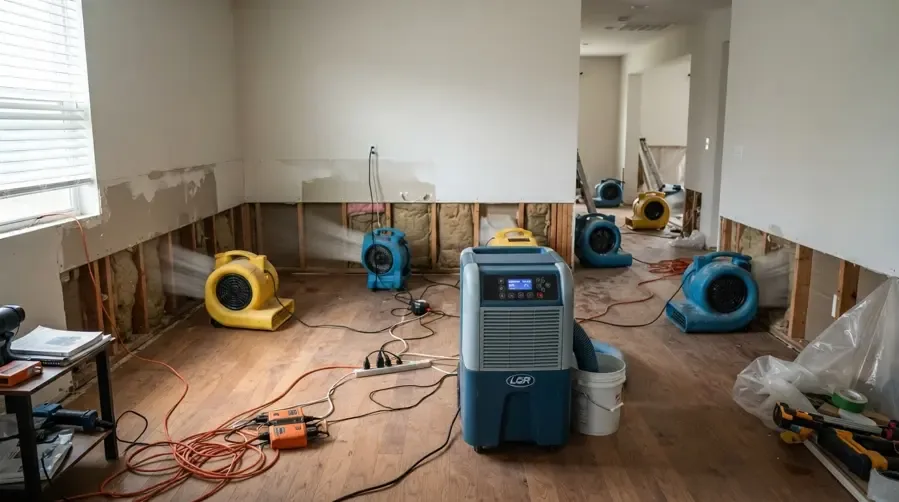
- Pump or extract standing water in every affected unit and corridor.
- Map moisture in baseboards, drywall and the slab or subfloor.
- Remove carpet pad and soaked insulation that cannot be dried.
- Set dehumidifiers and air movement by zone and log the readings daily.
Floodwater from outside is not clean water
Rain that has run over pavement, soil and landscaping picks up whatever is on the ground. Inside a living space it is handled as contaminated water.
Porous materials that were soaked, such as carpet, pad and the lowest strip of drywall, are generally removed rather than cleaned. Hard surfaces are cleaned and disinfected.
Residents should not walk through wet corridors barefoot or let children and pets play in them, even after the water looks gone.
Keeping residents informed and housed
The 2013 report said some residents could be displaced for several days, and the Red Cross helped on scene. Displacement is part of the cleanup plan, not a side issue.
Residents want to know three things: whether the unit is safe, when it will be dry and where to stay in between. A manager who can answer those with a date range keeps the building calm.
- Post written updates in a common spot and send them to every household.
- Tell residents which belongings can be removed and which should stay for the insurer to see.
- Give each unit a status after every set of moisture readings.
- Note any resident with mobility, health or language needs who may require extra help.
Owners, renters and the insurance conversation
In 2020 about 69.9% of occupied units were owner occupied (13,848) and 30.1% were renter occupied (5,973). About 25.6% of housing units, 5,289, were in buildings with several units.
That mix matters after a flood. A building owner's policy generally covers the structure, while a renter's belongings depend on the renter's own coverage, and an owner of a unit has yet another arrangement.
Asking each insurer what is covered is better than guessing.
Readings, photos and moisture logs from the restoration team are kept for the insurers. A fast water extraction start and a clear structural drying log make that record easier to build.
Questions
Was the July 2013 flood a flash flood?
The KSL report describes overnight flooding from about 1/2 inch of rain in some mid valley areas. It does not call the event a flash flood, and it names rainfall as the cause.
How much water was in the apartments?
About 24 apartments each had at least 3 to 4 inches of water on the bottom floor, according to the report.
Who helped on scene?
Unified Fire responded, located the source and cleaned up, and the Red Cross helped residents on scene.
Do renters need to do anything different from owners?
Renters should photograph their belongings, tell the property manager and ask their own insurer what is covered. Owners and managers deal with the structure and common areas.
How long can residents be out of their units?
The report said some residents could be displaced for several days. The real timeline depends on the readings in each unit and how quickly the building can be dried.
What should residents do with wet belongings?
Move items to dry spots, photograph them first and keep damaged items until the insurer has seen them or approved disposal. Porous belongings that sat in floodwater, such as upholstered furniture and mattresses, are often not salvageable.