Commercial Water Damage in Murray, UT
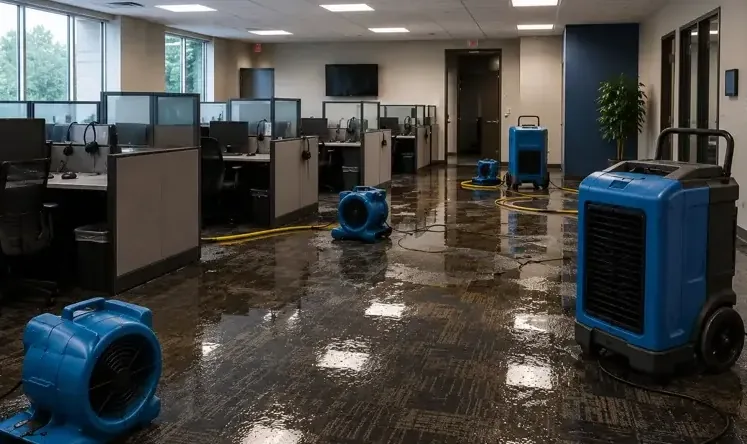
When water hits a shop, office or showroom, every hour of closed doors costs revenue. The mitigation team extracts the water, dries the structure and documents the loss so the business can reopen as soon as the readings allow.
(888) 558-4812 Business flooded? Get the dry-out started- Shops, offices and showrooms
- Phased drying plans
- Loss documentation
What to do first about commercial water damage
- 1
Stop the source
Shut the valve or isolate the system feeding the leak.
- 2
Protect contents
Move inventory, files and electronics off the floor or onto upper shelves.
- 3
Keep people clear
Block wet walkways and stay away from ceilings that sag or fixtures that are wet.
- 4
Document everything
Photograph the loss and list affected stock and equipment for the carrier.
What does commercial water damage cost in Murray, UT?
Commercial water damage typically runs from about $2,500 for one shop to over $60,000 for a building-wide loss, shaped by floor area, materials, contents and how much downtime the plan has to limit.
One small shop or office
$2,500 to $8,000
- Extraction
- Targeted drying
- Moisture records
Several units or one full floor
$8,000 to $20,000
- Phased work areas
- Ceiling tile removal
- Added equipment
A loss across the whole building
$20,000 to $60,000+
- Drying on every floor
- Daily monitoring
- Carrier documentation
Ranges are typical, never a quote: the water category, the square footage, the material class and how fast drying started move the number most. For a planning figure, try the water damage cost calculator.
A water loss in a commercial building rarely stays inside one tenant space. Flooring, ceilings and shared walls carry the moisture to neighbors, and inventory, equipment and records add value to the loss. The first decisions are about stopping the spread, water extraction and keeping the rest of the building open.
A city built on retail and healthcare
Murray's industry mix has shifted toward healthcare, retail and professional services. State Street is dominated by auto dealerships, Fashion Place Mall draws shoppers, and Intermountain Medical Center is the city's largest employer. Buildings like these hold costly contents and have little room for downtime.
What a commercial dry-out involves
- Water is extracted from carpet, tile and slab, with walkways and exits kept clear
- Drywall, ceiling tile and insulation are removed where meters show saturation
- Drying equipment is placed to keep part of the space usable where possible
- Photos, moisture logs and equipment records are kept for the carrier
Planning around the business
The response team agrees on the work areas first, so a showroom, waiting room or stock room can reopen in stages. A small leak may involve one room, while a larger loss is phased by area; structural drying explains how each dry-out is measured.
How commercial water damage is handled
Each step follows the IICRC S500 drying standard and leaves a record for the claim file. Equipment stays until the readings say dry.
- 1
Assess
Meters map the wet areas and set the work zones.
- 2
Extract
Standing water and soaked carpet are removed.
- 3
Dry
Equipment runs by zone while readings are logged.
- 4
Report
The records go to the manager and the carrier.
Commercial water damage across Murray and nearby communities
Commercial work covers shops, dealerships and offices along State Street and Highland Drive, the retail area around Fashion Place Mall, the Intermountain Medical Center area and business space near the TRAX stations across all four ZIP codes.
The same service nearby: commercial water damage in Midvale, Taylorsville, Holladay.
Commercial Water Damage questions in Murray
Still dealing with it?
Water in the shop or office? The mitigation team extracts it, dries the structure and keeps the records the carrier needs.
(888) 558-4812 Ask about business dry-out plansCan a business stay open during a dry-out?
Often partly. The wet area can be sectioned off and dried while the rest of the space keeps operating, depending on the water type and spread.
What records does the carrier need?
Photos, moisture readings, equipment logs and a list of damaged stock and fixtures. The team keeps these during the job so the file is complete.
Whose cost is a neighbor's leak?
Mitigation starts with stopping the spread into your space, whoever owns the source. Who pays is a lease and insurance question.
How does commercial drying differ?
Larger floor areas, shared walls and costly contents call for zoned drying, more equipment and tighter records than a house usually needs.
How long does a commercial dry-out take?
Small losses dry in a few days, while slabs and thick insulation can stretch it to a week. Readings decide when it is complete.
Business water loss? Limit the downtime.
Moisture travels through shared walls and ceilings, so the sooner the wet zones are mapped and dried, the fewer neighbors and materials are affected.